
Cross-platform mobile development explained
Summary
This article explains cross-platform mobile development in 2026 from a practical, product-first perspective. It defines what cross-platform mobile app development is today, when the approach is effective, and when native development remains a better fit. It outlines four major frameworks – Flutter, React Native, Kotlin Multiplatform, and .NET MAUI – and describes how each works technically and where each brings value.

Eugene Sihai
Head of Mobile Development Department, Modsen
Most discussions around cross-platform mobile application development still rely on familiar arguments – speed, cost, “one codebase for both platforms.” But in practice, the real choice is rarely that simple. It depends on where the product is heading, what risks the business is willing to take, and how clearly both the business side and the engineering side understand the implications behind each path.
That's why this article focuses on cross-platform through that practical lens – not as a shortcut, but as an approach that can support a product’s growth when used deliberately. Ahead, we’ll unpack what cross-platform actually means today, where it creates real value, and where its trade-offs start to matter – helping you decide whether it’s the right direction for your product or your career.
What is cross-platform mobile app development
At its core, cross-platform mobile app development is the approach of building a single mobile application that runs on multiple operating systems – typically iOS and Android –using a shared codebase. Instead of maintaining two separate native apps with different languages, tools, and release cycles, teams work within one unified environment and deliver updates simultaneously across platforms. For many companies, this becomes not just a technical decision but a strategic one: reducing duplication, aligning timelines, and simplifying product evolution.
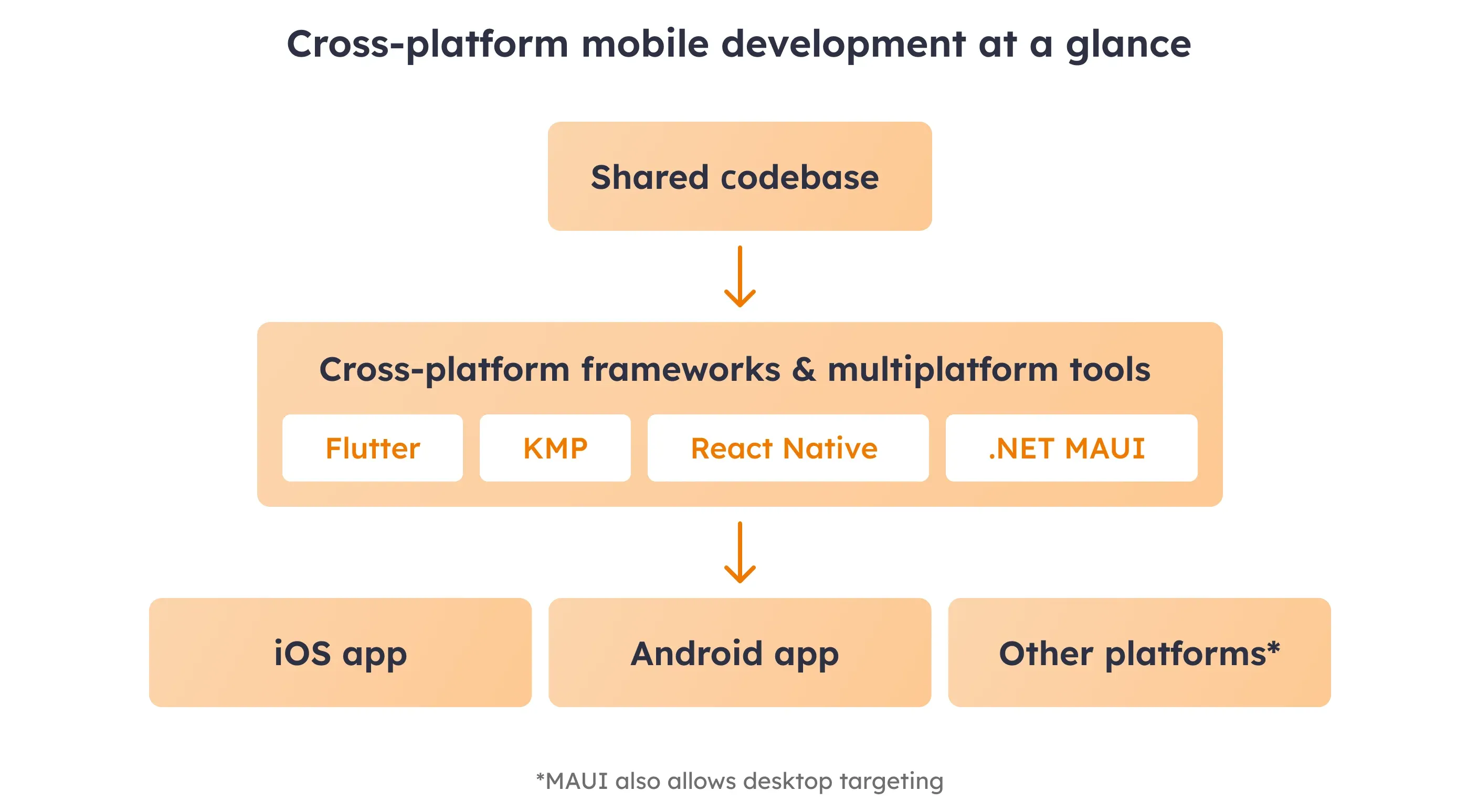
One shared core – and four major ways to bring your product to every device without losing its identity.

Get a weekly dose of first-hand tech insights delivered directly to your inbox